
You have chosen the design, approved the quote, and marked a date on the calendar, so it is natural to assume the fence will be standing within days. Then a permit needs review, the utility lines need marking, and the custom materials need ordering, and the schedule starts to feel less certain. Does that mean something has gone wrong? Not at all, because these steps are a normal part of every project.
Understanding each stage before it arrives helps you set realistic expectations and stay calm when one step takes longer than planned. This guide walks you through the whole process so nothing on the schedule catches you by surprise.
Iron Fence Installation Timeline Step by Step
A fence project has several stages, and only some of them happen in your yard. Understanding the order makes it easier to see where time is spent and where you can help things move along.
1. Planning and Approvals Come First
Your first step is settling the fence line, the height, and the style. Many places also require a permit. In Rockford, Illinois, for example, every fence needs a permit, and each permit stays valid for 120 days after approval.
If your neighborhood has a homeowners association, its review may be needed as well, and one city warns that failing to follow association rules can cause substantial delays. Starting these applications early is the simplest way to protect your schedule.
2. Utility Marking and Site Preparation
Before anyone digs, the underground utilities must be marked. The national 811 service advises contacting your state center a few business days before digging, and it lists fence installation among the common projects that need this step.
You should also confirm your boundaries. One town’s application says owners must locate their property corner markers before applying, and it notes that a land surveyor may be needed to re-establish them. Clearing brush, old fencing, and rocks along the fence line comes next.
Iron Fence Installation Duration Depends on Your Property
No two properties are the same, so the number of days on site varies from one job to the next. The length of the fence, the slope of the ground, the number of gates, and the amount of custom detail all play a part. The table below shows how several stages add time before the panels ever go up.
| Stage | What to expect |
| Utility marking | Contact 811 a few business days before digging |
| Permit | In one city, permits stay valid for 120 days after approval |
| Association review | Missing approvals can cause substantial delays |
| Post setting | Concrete should set for at least 24 hours before work continues |
What Affects Iron Fence Installation Time on the Job Site
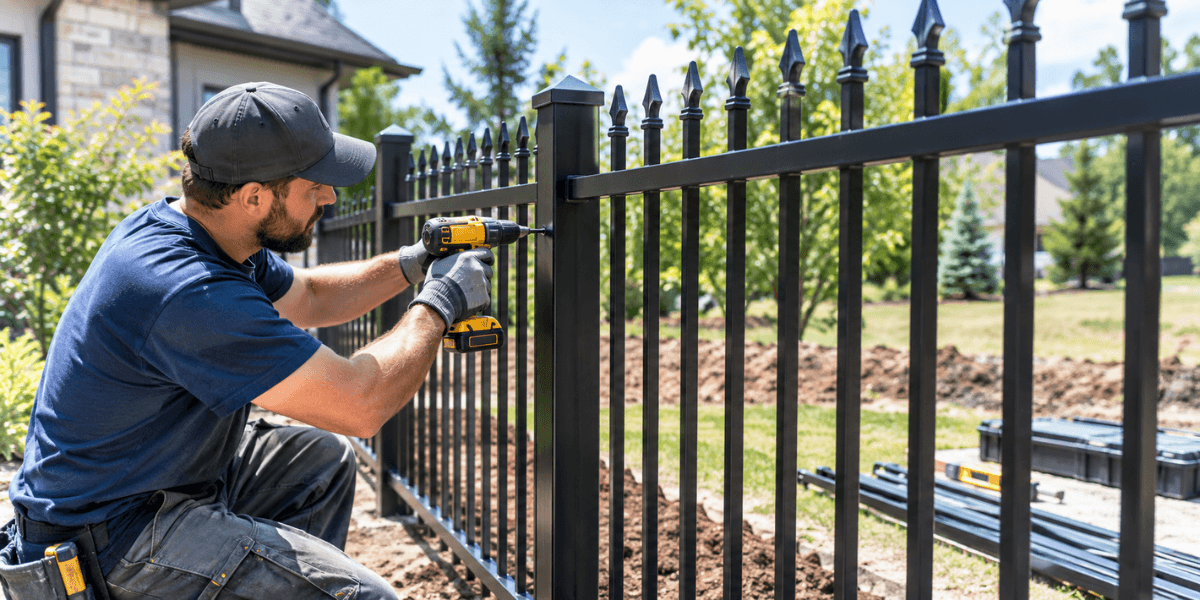
Once approvals are complete and the materials arrive, installation begins with the posts. This Old House advises allowing the concrete to set for at least 24 hours before continuing, and it says the posts must be braced until then. With standard concrete, that built-in pause usually means the panels cannot be hung on the first day, although fast-setting mixes can shorten the wait to about four hours. Several other factors influence the pace once the crew is on site:
- A longer fence line needs more posts, more panels, and more welding, so the work naturally takes longer.
- Sloped or rocky ground requires extra digging and careful stepping of the panels.
- Custom scrollwork and decorative details need more fabrication and finishing than simple picket panels.
- Rain, snow, or extreme heat can pause digging, concrete work, and painting, which pushes the schedule back.
Gates and Custom Details Add Their Own Steps
Gates are often the most precise part of the job. Hinges, latches, and the swing of each leaf must line up exactly, and the posts that carry a gate need to be strong and properly set. Any opener or lock hardware also needs testing before the project can be called complete. For this reason, a fence with several gates usually takes longer than a plain run of panels of the same length.
Planning a gated entrance along with your fence? Ensley Iron designs custom iron driveway gates in Birmingham, AL, and offers a free consultation to help you map out the details.
How Long to Install an Iron Fence and How to Plan Around It
The best way to protect your schedule is to treat the project as a series of steps and ask your installer about each one before work begins. These questions will help you get a clear picture:
- Which permits or association approvals does my property need, and who will apply for them?
- Has someone requested the utility markings, and when will they be finished?
- How long will the custom parts take to fabricate before installation begins?
- What is the plan if bad weather interrupts the digging or the concrete work?
- When do you expect the gates and the final finishing to be complete?
Ask for a written schedule that covers the approval stage, the fabrication stage, and the on-site work. A schedule on paper makes it easier to spot delays early and to decide when you need to step in.
Frequently Asked Questions
1. Do I need a permit before installing an iron fence?
Often you do, but the rules depend on where you live. Your local planning or building office can confirm what applies to your property. Applying before work begins helps you avoid delays.
2. Why do utilities need to be marked before digging starts?
Marking shows the approximate location of buried utility lines. This lets the crew dig safely and avoid service disruptions, costly repairs, and injuries. Digging should begin only after every utility has responded.
3. Can weather delay the work?
Yes, rain, snow, and extreme heat can pause digging and painting. Concrete around the posts also needs time to set, so weather that affects the concrete can push the schedule back.
4. Can homeowners association rules affect the schedule?
Yes, many associations require approval before work begins, and a permit office may expect that approval first. Missing this step can cause delays, so it is best to check the rules early.
5. Do I need to know my property lines before the work starts?
Yes, because the fence must sit inside your own boundary. Locate your property corner markers before the project begins. If you can’t find them, a land surveyor can help you confirm them.
Final Thoughts
An iron fence is a long-term investment, so a steady schedule is worth more than a rushed one. Approvals, utility markings, and concrete setting cannot be skipped, but they can be planned. When you understand each stage, you can work with your installer to keep the project moving and enjoy the finished result with confidence.
Ready to start planning? Ensley Iron builds every ornamental iron fence to suit your property, and you can request a quote today.