
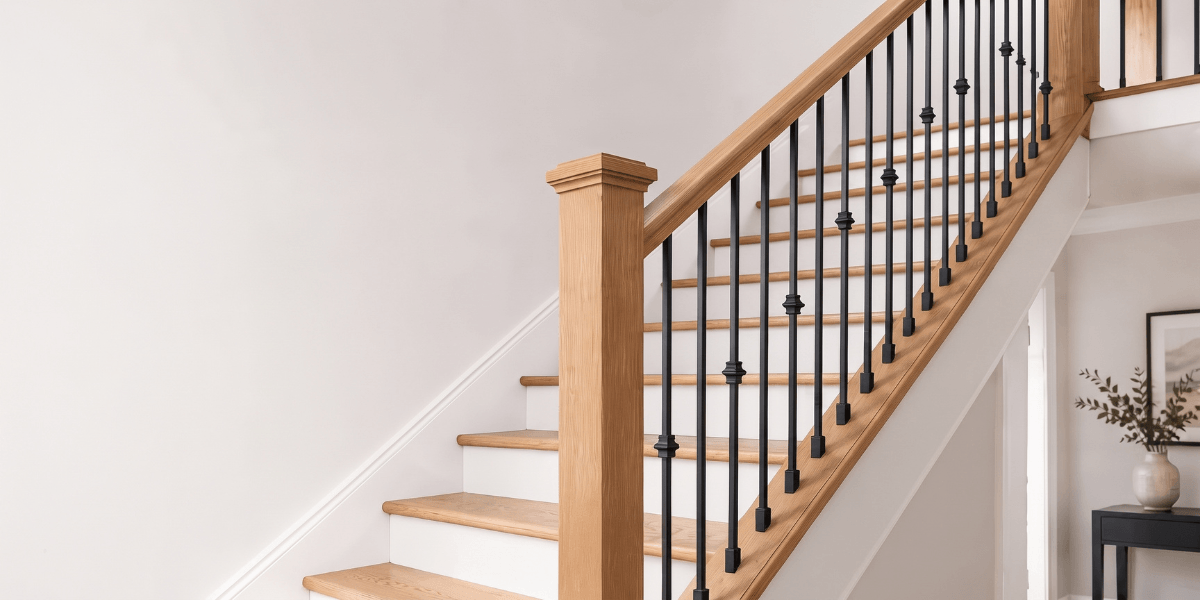
A staircase tells a story with every step, and the railing is the sentence that keeps it safe. Wood brings warmth underfoot, while black iron brings strength at your fingertips. Put them together, and you get a look that feels both cozy and commanding. Homeowners love wooden stairs with iron railing because the pairing looks timeless and holds up for years.
Still, wood and metal behave differently, and a rushed job can leave loose posts or rusty stains. Read on to learn how these two materials work together, what building codes expect, and how to plan the installation so your stairs stay steady for years to come.
Can You Put an Iron Railing on Wooden Stairs?
Yes, you can. Iron provides strength, while sound wood offers a stable base for installation. For an iron railing on wooden stairs, the key is anchoring each post securely into the stringers or added blocking rather than relying on the thin surface of a tread.
A railing attached only to trim may lack the structural support needed for a secure installation. Plan the attachment points first, then pick the style. Once the structure is settled, you can choose scrolls, straight bars, or a simple modern profile that best matches your home.
What Wooden Stairs Need Before the Work Begins
Want an iron stair railing on wood stairs that stays steady? Start with a little prep.
Sound Stringers and Treads
Check the wood first. Press a screwdriver tip into the stringers, treads, and posts. Soft or crumbly spots mean rot, and rot cannot hold a bolt. Swap out weak boards before installation day, because the stringers carry the weight of your new railing posts.
Load Needs for an Iron Stair Railing
Next, think about strength. Building codes require railings to resist a 200-pound concentrated load applied at the top rail. Iron can be heavy, so your stairs need adequate framing behind each post. Posts fastened only to trim or fascia can fail that test.
Code Rules for Height and Spacing
Last, learn the local rules. Stair handrails should sit 34 to 38 inches above the front edge of the steps and feel easy to grip. Under the International Residential Code, guards on the open sides of stairs cannot have openings that allow a 4 3/8-inch sphere to pass through, and the triangle formed by the riser, tread, and bottom rail must stop a 6-inch sphere. Local jurisdictions may adopt amended codes, so check with your building department first.
Steps for Installing Iron Railing on Wood Stairs
Post Layout and Marking
Set the top and bottom posts first, because every other measurement depends on them. Mark each spot so the base sits over a stringer or solid blocking, never a gap between boards. Check your rail height against the 34 to 38 inch range.
Blocking for Strong Anchors
Add solid 2x blocking between framing members so each bolt anchors securely into substantial structural wood. This blocking spreads the load and keeps the post from twisting when someone leans on it. Without it, the connection may be affected as the wood naturally changes with moisture.
Corrosion-Resistant Hardware
Copper-based treatments in pressure-treated lumber can corrode unprotected steel bolts. Use hot-dip galvanized or stainless steel fasteners, and choose compatible metals for every connector. Mixed metals can start a reaction that wears hardware out faster.
Post and Rail Fastening
Secure each post through the stringer or blocking with suitable hardware, rather than relying on trim alone. Through-bolts with washers can provide a strong hold when properly sized and anchored. Then set the handrail between the posts so it stays continuous and easy to grip along the entire flight.
Final Checks and Sealing
Check each post and connection for noticeable movement before putting the railing into service. Check every opening against the applicable local building code requirements. Touch up scratches with paint to keep moisture away from bare metal and keep rust at bay.
Every great railing begins with careful planning long before the first bolt goes in. From porch steps to deck stairs, Ensley Iron designs and fabricates iron stair railings in outdoor living spaces you can count on. Reach out today for a railing plan that fits your home!
Wooden Stairs with Iron Railing: Common Challenges and Fixes
Every staircase has quirks, and each one below has a simple answer.
| Challenge | Simple Fix |
| Soft or rotten wood | Replace weak boards before installing |
| Heavy iron posts | Anchor into stringers or solid blocking |
| Bolts corroding in treated wood | Use hot-dip galvanized or stainless steel fasteners |
| Wood shifting as it dries | Use through-bolts with washers and recheck them |
| Strict code rules | Confirm height and spacing with your local building department |
Frequently Asked Questions
1. Can you put an iron railing on wooden stairs?
Yes. Anchor the posts into suitable framing or solid blocking, and the railing can remain steady on wood.
2. What is the safest way to attach the railing posts?
Use solid blocking, through-bolts with washers, and corrosion-resistant hardware, then test the railing with firm pushes before anyone uses it.
3. How high should a stair handrail be?
Residential codes require it to be 34 to 38 inches above the tread nosings, and the rail should be easy to grip.
4. Will an iron railing rust on treated wood?
A coated railing can resist rust well. Plain steel bolts are the weak link, so use hot-dip galvanized or stainless steel hardware.
5. Do I need a permit?
Rules vary by city, so call your local building department before you start.
Conclusion
Yes, wood and iron make a great team when the plan is solid. Check the wood, anchor into the framing, choose matched corrosion-resistant hardware, and follow local code. Do that, and an iron stair railing on wood stairs becomes a safe, handsome upgrade your family can lean on every day.
A safe climb starts with a smart plan. Ensley Iron brings that plan to life through custom staircase design built around your steps. Contact us today for a railing that feels solid in your hand and looks stunning on your stairs!