
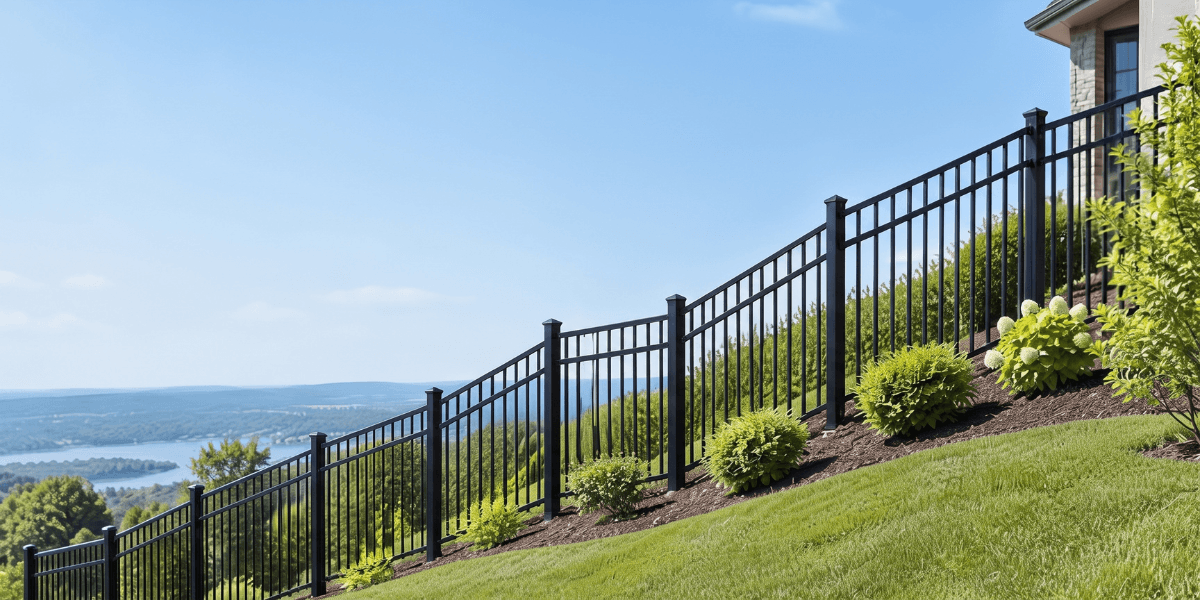
Hills bring great views and a few plot twists for fence plans. Water runs downhill, soil shifts, and a straight line suddenly needs to bend. A fence on a sloped yard has to climb, settle, and stay secure without leaving awkward gaps for pets to slip through.
The good news is that iron is strong, graceful, and easy to shape around your land. With the right style, accurate measurements, and a clear plan, your hillside can look polished and feel safe. Here are the choices that matter most, so you can picture the finished fence with confidence and decide each step calmly. Think of this as your friendly map for the climb.
What Makes an Iron Fence on a Sloped Property Different
Slopes change how panels, posts, and gaps behave, so it’s worth a quick review of the basics.
Rails, Posts, and Ground Level
Iron panels are rigid, so they cannot always flex to match a hill. Posts stay upright, and the rails stay level or tilt with the grade. That choice shapes the look, the cost, and how the bottom edge meets the soil.
Slope Angle and Length
Every slope has a steepness and a length, and both shape the layout. A gentle grade leaves you more freedom, while a steep hill limits your options. Measure the drop along the fence line first, because installers plan each section from those numbers.
Gaps, Pets, and Local Rules
Uneven ground can leave open space under the fence. That gap matters if you have small pets or a pool, since pool barrier codes commonly limit the space between the ground and the bottom of the fence to 2 inches. Check your local rules early, so your design passes inspection the first time.
Stepped and Racked Styles Explained
Two installation methods handle hills, and each gives the fence its own personality.
A stepped fence keeps every panel level and sets each new section higher or lower than the last, which creates a staircase pattern along the hill. This method suits steeper slopes, though triangular gaps can appear under the panels. Planters or landscaping fill can hide that space, and ground-level solutions that follow the terrain can help keep small pets inside.
A racked fence keeps posts plumb and tilts the rails so they run parallel to the ground, which creates a smooth, flowing line. It works best on gentle and moderate slopes. Because pre-assembled panels vary, stepping suits almost any iron fence on sloped ground, while racking depends on the panel system and the steepness of the grade. Ask your fabricator which option suits your yard.
How to Install an Iron Fence on a Slope
A steady work order keeps the project on track, so follow these stages in sequence.
Planning the Fence Line
A clear plan is the backbone of a fence on sloped ground. Map the fence line, measure the total drop, and mark each post location with even spacing so every section fits the slope before you start digging.
Digging and Setting Posts
Dig each hole deep enough for a firm footing, since the posts carry the whole fence. Set every post plumb, because a leaning post throws off each section after it and makes the panels harder to align on the hill.
Footings and Downhill Pressure
Concrete footings hold posts firmly in place on most sites. On a slope, installers also account for soil movement and water runoff on the downhill side, which keeps posts steady and the whole line upright as the years pass and the soil settles.
Attaching Panels and Final Checks
Attach the panels last and check level for stepped sections or angle for racked ones. Then walk the line to inspect every gap, gate swing, and post, since a careful final review saves repairs later and keeps the fence sharp.
A good fence protects what you love and makes your home look finished. Ensley Iron builds each ornamental iron fence with your property and style in mind. Reach out today for a quote that turns your ideas into iron!
Stepped vs. Racked: Key Differences
Here is a quick side-by-side look at how the two styles compare on the features that matter most.
| Feature | Stepped Fence | Racked Fence |
| Rails | Level | Angled with the slope |
| Posts | Plumb, set at varied heights | Plumb |
| Slope fit | Suited to steeper grade changes | Follows the slope within the system’s rackability |
| Bottom gap | Triangular gaps possible | More consistent along the slope |
| Panel type | Pre-assembled panels | Panels designed to adjust with the grade |
Frequently Asked Questions
1. Which style looks better on a hill?
Racked fences create a smooth, flowing line, while stepped fences give a bold staircase pattern. The better pick depends on your slope, your style, and your pets.
2. Can an iron fence on sloped ground go up without grading?
Yes. Stepped installation lets the fence follow uneven land without costly grading or excavation.
3. How steep is too steep for racking?
Limits vary by product, but racking works best on moderate slopes. Steeper hills may require a stepped fence or a custom-contoured design.
4. Should I hire a professional?
Hiring a professional can ensure accurate measurements, proper post depth, suitable gap solutions, and a well-planned installation on sloped ground.
5. Will a sloped fence stay stable?
Yes, when installed correctly. Proper post placement and secure footings help keep the fence upright and stable on sloped ground.
Conclusion
A fence on a sloped yard works best when style, slope angle, and safety needs agree. Stepped designs suit steeper hills, and rackable systems give a smooth line on gentler ones. Measure carefully, plan for gaps, and keep every post plumb. With those pieces in place, your hillside gets a fence that looks great and lasts for years.
Once your hillside has a fence that stands strong, why stop at the yard? Ensley Iron also crafts custom interior iron railings with the same care that goes into every fence. Contact us today to bring that lasting strength indoors!