
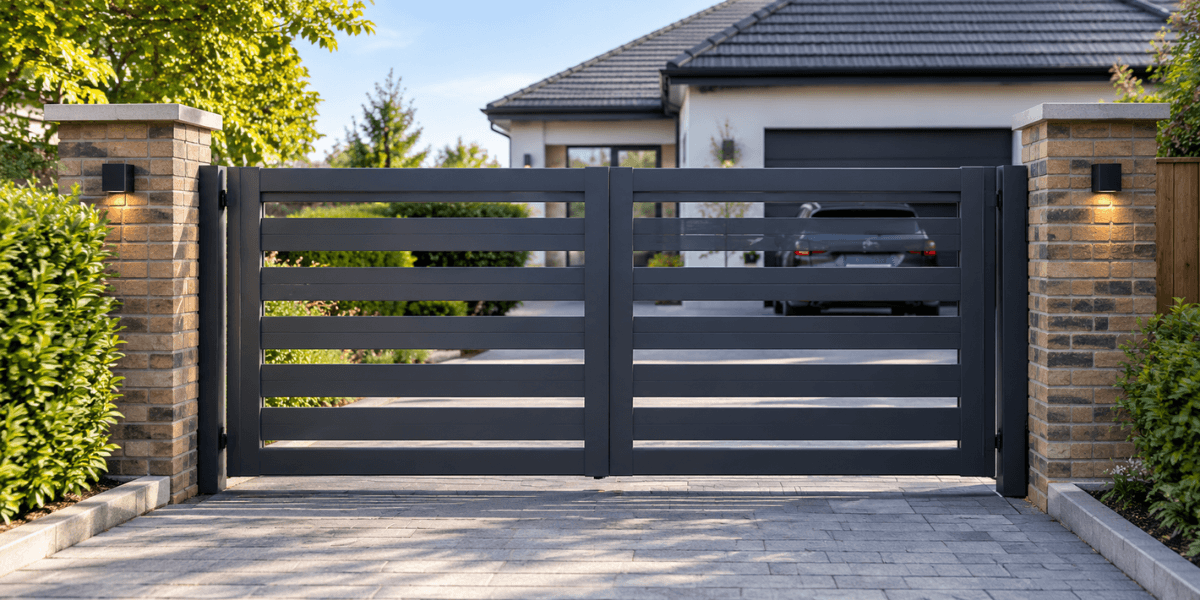
A gate is usually the first thing visitors notice about a property, and its size sends a message before anyone reaches the front door. Get the driveway gate dimensions wrong, and you end up with a structure that looks cramped against a grand entrance or lost against a modest one.
Property owners everywhere face the same puzzle. They want a gate that fits their vehicles, matches their home’s scale, and holds up against weather and wear. Some picture a stately iron entrance framed by brick pillars. Others need a compact gate that does its job quietly. Either way, getting the measurements right from the start saves money, time, and frustration later.
How Wide Should a Driveway Gate Be?
Vehicle size and property layout together decide the right opening for your entrance.
Single Vehicle Openings
For a single-car driveway, the gate opening typically falls between 10 and 12 feet. This range provides enough room for most cars and small trucks and works well for standard driveways or properties with limited space. For most homes, a gate in this range strikes a practical balance between security and accessibility. A gate that is too narrow makes entry frustrating, especially when guests, deliveries, or larger vehicles arrive.
Double Vehicle Openings
For wider driveways, 12 to 18 feet is a common guideline. This range suits properties with frequent visitors or deliveries and provides better access for larger vehicles or two-way traffic. The exact width depends on the driveway layout, vehicle types, and how often traffic moves in and out of the property.
Extra Wide Entrances
Commercial, agricultural, and industrial properties may use openings of 18 to 24 feet or more, depending on vehicle and access requirements. These wider gates accommodate delivery trucks, trailers, and heavy machinery. Rural properties may also benefit from wider double gates when livestock, equipment, or large vehicles regularly need access.
Driveway Gate Height and Measurements
Most residential driveway gates stand between 4 and 6 feet tall. This range balances visibility, privacy, and the entrance’s overall scale. Taller gates may provide more privacy for homes near busy streets, while shorter designs create a more open appearance. The ideal height depends on the property’s layout, style, and privacy needs.
Security-focused designs sometimes add spiked or pointed tops, but allowable height varies by location. Local zoning rules may limit fence and gate height, so check with your city before ordering. Strong hardware and a reliable lock also support the gate’s overall security.
Getting the height and measurements right sets the tone for your whole entrance. Ensley Iron specializes in ornamental iron works and brings years of custom fabrication experience to every gate. Reach out today for a gate built around your exact property!
Property Type and Sizing Considerations
Different properties place different demands on a gate, so the right driveway gate measurements often start with the type of property behind it.
| Property Type | Key Sizing Considerations |
| Residential | Balances everyday vehicle access with curb appeal, privacy, and a comfortable scale for the home. |
| Estate | Prioritizes visual impact and grandeur, often calling for wider openings and taller, more ornamental designs. |
| Farm | Needs to accommodate large equipment, trailers, and livestock traffic, so width and durability matter most. |
| Commercial | Centers on traffic volume and security, with sizing built around delivery vehicles, staff access, and controlled entry. |
Factors That Affect Driveway Gate Dimensions
A handful of practical details shape the final size decision more than most people expect.
- A curved driveway needs a different gate angle than a straight one, and steep grades commonly call for a sliding gate over a swinging panel. Post placement also depends on nearby trees, slopes, and underground utilities.
- Swing gates need clear yard space to arc open and closed, while sliding gates need a flat track running parallel to the fence line. Both handle automation well, though space needs differ.
- Iron gates carry real weight, so posts need a deep, solid footing to hold up over years of use. Aluminum panels run lighter, placing less strain on hardware and hinges over time.
- Cities and homeowner associations often cap fence and gate height near the street, and some areas require a setback so the gate doesn’t swing into the public right-of-way.
- A family sedan needs less clearance than a full-size pickup truck or an RV, and homes hosting trailers or boats need extra width built into the gate plan from day one.
- Emergency vehicle access also matters across rural or gated communities, so building in a few extra feet now avoids a tight squeeze once construction begins.
Frequently Asked Questions
1. How wide should a driveway gate be for a single car?
Single-vehicle openings commonly measure around 10 to 12 feet across. This gives enough room to turn in without clipping gate posts or mirrors.
2. How tall is a typical driveway gate?
Most residential gates stand between four and six feet tall. Taller gates can suit properties that prioritize privacy or security.
3. Do double gates need more space than single gates?
Yes. Double driveway gates commonly span about 12 to 18 feet, providing ample clearance for smooth, comfortable access.
4. How do I measure my driveway for a new gate?
Measure the distance between the inside faces of the gate posts at the ground, middle, and top. Record the smallest measurement as the clear opening, then account for the hardware and operating clearances when determining the final gate size.
5. Can a driveway gate be custom sized?
Yes, custom fabrication lets you build a gate to your exact property measurements, vehicle needs, and style preferences beyond any fixed standard size.
Conclusion
Finding the right fit for your entrance takes some planning, but the payoff is worth it. The right height, width, and post spacing protect your vehicles, your privacy, and your curb appeal. Starting from the standard driveway gate size and adjusting for your vehicles, layout, and local rules gives you an entrance that works well and looks sharp. Take your measurements, note your local codes, and talk to a fabricator who builds gates for your exact situation.
Ready for an entrance that fits perfectly? Ensley Iron designs custom iron driveway gates sized to your property, your vehicles, and your style. Contact us today for a gate built to last!